
What to Know Before Buying Football Shoulder Pads:
Proper Sizing, Youth vs. Varsity, Accessories, Pad Lifespan, and Care
June 1, 2026
Most people shopping for football shoulder pads start with the model and size. Those are the right instincts, but they’re only part of the picture. A shoulder pad that fits correctly, matches the athlete’s level of play, integrates with the right accessories, and gets properly maintained will outperform a more expensive pad that checks none of those boxes.
Football has evolved to be faster and more movement-driven than it was a generation ago, so the equipment conversation has had to change with it. Players need protection that doesn’t fight the natural movement of their bodies. Coaches need gear that holds up and fits correctly. Parents need to know their investment is going to last and protect their kid. None of that happens by accident.
This guide covers the practical knowledge every buyer should have before making a shoulder pad purchase: how to size correctly, what separates youth from varsity construction, which accessories are worth considering, how long pads realistically last, and how to care for them.
Why Proper Fit Comes First
Before comparing features, materials, or price, a proper fit has to come first. Shoulder pads are designed to protect key areas of the upper body while still allowing the player to move naturally. When the fit is off, that balance breaks down fast. Sizing mistakes are common because buyers often focus on one measurement or make assumptions based on age. Getting the right fit requires a bit more attention than that.
Pads that are too large shift during movement, sit too high or too low, and create the kind of bulk that slows an athlete down (without actually improving protection). Pads that are too small leave areas exposed, create pressure points, and become uncomfortable over the course of use. Either way, the athlete ends up fighting their equipment instead of focusing on the game.
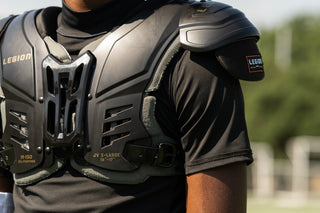
At LEGION, we recognize that a good fit affects coverage, stability, range of motion, and confidence in the gear. We believe that properly fitted shoulder pads should feel integrated with the athlete’s body, not strapped onto it. To make it simple, LEGION did the work for you, outlining how to properly measure and fit athletes in our pad sizing guide.
Critical Factors for Proper Sizing
1. Shoulder Width Matters Most
The most important sizing factor for football shoulder pads is shoulder width. Shoulder width is measured straight across from one edge to the other, and it determines how the pad shell sits on the player’s frame and whether the shoulder caps line up properly. A shell that’s too wide feels sloppy, while one that’s too narrow feels pinched. Shoulder width is the starting point, not the final answer.
2. Weight and Body Build Still Matter
Two players can have identical shoulder measurements and still need different pads if they have different chest circumferences. A broader, thicker athlete needs more interior room than a slimmer player with the same shoulder span. That’s why sizing charts typically include both shoulder width and a weight range. The two measurements work together to narrow down the right fit.
3. Position Changes the Ideal Feel
A lineman and a defensive back are not looking for the same thing in a shoulder pad. The lineman may want more substantial coverage with a more anchored feel. The DB or receiver wants something lighter and more streamlined that doesn’t compromise their ability to move and react. That doesn’t mean actively choosing to wear the wrong size in the name of position fit. It means once the size is correct, the model and profile should reflect how the athlete actually plays.
4. Range of Motion Should Be Tested
Standing still in a pad and saying it fits is not the same as testing with motion. Before committing to a pad size, the athlete should raise their arms, rotate their shoulders, get into a stance, and simulate real football movement. The pad should stay in place while the athlete moves freely through it.
The most common sign that something's off with the fit is if the shoulder caps are sitting too far outside the natural shoulder line. Also, be sure to check if the pad is riding up too high into the neck area or gapping/floating over the back. Look for excessive shifting when the arms move, or tight pinching around the neck and underarms. Any one of these issues is important to address before the player steps on the field.
5. Growth Should Be Considered, But Not Overdone
The temptation to prematurely size up in order to get more life out of a purchase is understandable, but oversized pads are not a smart play if the player has to wear them now. Properly fitted protection in the present matters more than trying to squeeze out an extra season in the future. A little room for growth is reasonable, but buying pads that are significantly too large creates real problems. Oversized pads are more cumbersome, heavier, and don’t conform properly around the surfaces they’re supposed to protect. That’s not a tradeoff worth making.
Why Youth Players Need the Right Fit and the Right Design
For younger players, shoulder pads need to do more than cover the body. They need to fit correctly, move naturally, and match the stage of development the athlete is actually in. A youth pad shouldn’t just be the smallest adult pad the coach can find; it should be one actually engineered with younger athletes in mind. Youth players are still building the physical instincts that make football movement feel natural: running, planting, reacting to contact, and maintaining positioning. LEGION’s M80 Collection is built to protect and empower youth athletes as they grow and learn the game.
Equipment that feels oversized, stiff, or poorly balanced works against that development. It introduces friction where there shouldn’t be any, which is why fit and design need to work together. LEGION’s dynamic articulation in the soft cup shoulder protection is designed to provide more comfortable shoulder coverage while supporting a more natural feel in motion. Here’s a video explaining how LEGION pads are built to take hits differently.
Again, the goal for parents and coaches isn’t just to put a player in pads. Their goal should be to make sure those pads match the athlete’s current size, level of play, and how they actually move on the field.
Youth vs. Junior Varsity vs. Varsity Pads: What’s the Difference?
At a glance, youth and varsity pads can look similar, but in reality, they’re designed for different stages of physical development, different levels of play, and different body sizes. Understanding what separates them helps buyers make decisions based on the athlete’s actual needs rather than assumptions.
| Pad Category | Target Athlete | Key Characteristics |
| Youth | Younger, developing players | Sized for lighter frames/smaller shoulders; structured for learning the game. |
| Junior Varsity | Players in growth spurts | Bridges the gap; handles higher impacts and faster speeds; increased padding. |
| Varsity | Physically developed players | Built for high-intensity play, larger builds, and strong impact demands. |
Youth Pads
Youth shoulder pads are built for younger players who are still developing physically and learning the game. They’re sized for lighter frames and smaller shoulder widths, with protection and structure appropriate for that stage. A youth player needs a pad built for a youth body, not just a "small" version of an adult product. LEGION specifically engineered a line just for this purpose; our M-80 Pads are made in a variety of sizes and colors to deliver protection and confidence while learning the game.
Junior Varsity Pads
Junior Varsity pads bridge the gap between youth and varsity. Players at this stage are moving faster and generating more force on contact. Shoulder widths are starting to vary more significantly between athletes, and padding levels increase to match. These pads are built for bodies hitting growth spurts; not quite youth anymore, but not quite varsity yet. LEGION offers the M-150 model, designed to protect slightly larger body profiles in higher-impact scenarios beyond the youth game.
Varsity Pads
Varsity pads are designed for physically developed players competing at a higher level of intensity. Larger shoulder widths, greater chest circumference, more mature builds, and stronger impact demands all factor into varsity pad construction. The expectations of the game are different at that level, and the equipment reflects it. LEGION’s M-250 line has all of our modern technologies built into its protection system.
When Should a Player Move Up?
The answer isn’t age-based. A player should move to the next category when their body size, shoulder width, and level of play call for it. Some athletes outgrow youth gear well before their peers. Others develop more gradually. Measurements matter more than assumptions. Trying to keep a growing athlete in undersized gear, or jumping a younger player into varsity pads too early creates problems in both directions.
Protection Accessories: What They Do and Why They Matter
Shoulder pads are the foundation of football protection, but they’re not the whole picture. The right accessories can meaningfully upgrade how a player is protected and how comfortable the overall setup feels. Not every player needs every add-on, but understanding each one's role helps buyers avoid both under-protecting and overcomplicating the setup.
But if you add it to your setup, you should carry the same level of expectation for the add-on as you do for the rest of your gear. LEGION makes the back plates and rib combos with the same convective cooling channels and antimicrobial, dual-density foam technologies found in our shoulder pad lines.
Back Plates
Back plates add coverage for the lower back and spine. This is a critical area that can take contact and absorb falls throughout the course of a game. Back plates are popular among skill position players, including running backs, receivers, and defensive backs. A back plate adds some weight and bulk, so fit still matters. The shoulder pad and back plate should integrate cleanly rather than feeling like two separate pieces of gear fighting each other. Check out LEGION’s selection of back plates here.
Rib Protectors
Rib protection gets used most often by quarterbacks, who absorb hits to the midsection after releasing the ball, but it’s useful for any position that takes repeated body contact. Running backs and linebackers are common users as well. Athletes recovering from a previous rib or midsection injury often find rib protection gives them the confidence to play through contact without holding back. LEGION’s rib combo delivers critical protection with all of our modern technology.
The Rule with Accessories: More isn’t always better. Too many add-ons create excess bulk, reduce mobility, and can cancel out the benefits of a well-designed shoulder pad. The right setup matches the athlete’s position, body type, and comfort level. A lighter, better-ventilated pad makes accessories easier to integrate cleanly. A heavy, stiff base pad makes everything feel worse when you start adding to it.
The Life Cycle of Shoulder Pads: Do Pads Expire?
Pads don’t expire the way food does, but they absolutely have a life cycle. In youth football, especially, players tend to outgrow shoulder pads before the gear reaches the end of its usable life. That’s not always the case at higher levels, where the same athlete is putting the same pads through a full season of practice and game contact year after year.
Why Pads Break Down
Football gear takes a beating over its usage lifespan. Repeated impacts, sweat, heat, and storage conditions all contribute to wear over time. Older pad designs tend to hold moisture more easily and stay damp longer, which accelerates material breakdown and creates hygiene problems. Heavier, more absorbent materials trap sweat practice after practice, and that accumulation diminishes the condition of the padding, as well as the experience of wearing it.
Signs a Pad Is Reaching the End of Its Useful Life
Even if the pad is technically still wearable, any of these signs could mean its protection and reliability are already compromised:
-
Cracked or damaged shell components
-
Worn, flattened, or compressed padding that no longer springs back
-
Loose or failing hardware
-
Broken or overstretched straps
-
Poor fit caused by material fatigue
-
Persistent odor or visible material breakdown from moisture exposure
How Long Should Pads Realistically Last?
Lifespan depends on frequency of use, level of play, how well the pads are cleaned and stored, the quality of the original construction, and whether they still fit properly. The fact is, there’s no universal answer. A pad that gets heavy use and no maintenance will wear out significantly faster than one that gets the same use and is properly cared for. Better materials and moisture-resistant construction don’t just improve the experience now, but they extend usable life down the line.
Cleaning and Caring for Your Pads
Pad care is one of the most overlooked parts of equipment ownership, and the neglect compounds fast. Players sweat into their pads every practice. Those pads get tossed in a bag, left in a hot car, shoved into a locker, or packed away without drying out. Sweat and bacteria accumulate in the foam, then the odor builds. That unforgettable odor is burned into the brains of anyone who’s been around the game.
Soaked in the acidic moisture from a player’s sweat, padding materials break down faster than they should (see this comparison video on sweat absorption & how LEGION technology makes such a big difference in this aspect).
With repeated contact with skin in wet, bacteria-heavy conditions, irritation follows. What should have been a multi-season investment diminishes into a smelly, problematic piece of equipment that is more of a burden or a risk than an asset. The habits that prevent all of that are pretty easy, so let’s talk about them.
-
Air Pads Out After Every Use: After every practice or game, remove the pads from your gear bag and allow them to dry fully before storing them. Trapped moisture is the single biggest enemy of pad lifespan. Making this a habit can significantly improve the life and performance of the equipment.
-
Wipe Down High-Contact Areas Regularly: A regular wipe-down removes sweat, dirt, and buildup before it works its way deeper into the material. Getting ahead of this early is always easier than dealing with it after it’s been accumulating for days, weeks, or seasons.
-
Use Mild Cleaning Methods: Harsh chemicals can damage the foam and shell materials that make the pad protective. Gentle cleaning gets the job done without compromising the components that matter.
-
Inspect Straps and Hardware During Cleaning: A care routine is also a natural opportunity for inspection. Check for wear, looseness, and early signs of breakdown. Catching a fraying strap or loose pad before they fail completely is a lot easier than dealing with these issues mid-game.
-
Store in a Dry, Ventilated Area: Pads should not live in the trunk, the backseat, or a sealed bag between uses. Heat and trapped moisture unnecessarily accelerate wear on padding beyond what they sustain from games or practices. Give them somewhere to breathe and dry after every use.
Why Modern Pad Design Makes a Difference
A lot of the challenges covered in this guide, from moisture retention to poor mobility to accelerated wear, are downstream effects of how traditional pads were built. Dense, bulky, poorly ventilated construction creates problems that no amount of maintenance fully solves. Traditional padding just isn’t designed to handle the demands placed on it.
LEGION’s modern pad design addresses those problems at the source. Our pads are engineered with a dual-density foam that significantly resists moisture absorption, and they feature built-in cooling channels that allow greater airflow underneath the pads. These deliver lighter materials that breathe better and dry faster, which means less odor buildup, less material degradation, and a more comfortable experience. Take a deep dive into LEGION technology here.
Better construction means the pad holds its shape and protective integrity longer. A pad built to move with the athlete means fewer fit issues for players who might otherwise be adjusting or fighting their gear all practice.
Final Thoughts
Buying shoulder pads isn’t just about checking a piece of equipment off a list. The pad a player wears affects how they move, how they’re protected, and how comfortable they are deep into use.
The buyers who get this right pay attention to fit, match the gear to the athlete's actual stage of development, think carefully about which accessories add real value, and build maintenance habits that protect the investment. Do all of that, and the gear stops being a liability and starts being an advantage. You can find padding that delivers the advantages of modern technology at legionprotective.com.