
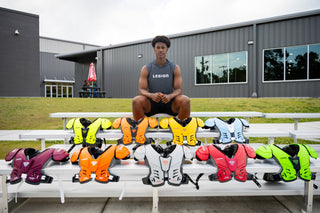
Building a Smarter Football Equipment Plan:
When to Replace Old Gear, How to Care for It, and How to Budget for Your Team
June 15, 2026
For most football programs, equipment decisions do not happen in a perfect world. Coaches and equipment managers are usually balancing multiple realities at once: limited budgets, growing rosters, hand-me-down gear, replacement needs, player comfort, and the constant pressure to make the most out of every dollar.
In some years, a program can refresh a large portion of its inventory. In others, the goal is simply to patch holes, extend the life of what is still usable, and avoid getting caught short when the season arrives. That is why shoulder pad planning matters so much.
A strong equipment program is not just about buying gear when something breaks. It is about building a system that helps a team stay ready, stay organized, and stay ahead of preventable problems. That includes knowing when to retire aging gear, understanding what used equipment can realistically continue to do, buying intelligently, and planning around roster needs before the season turns chaotic.
Whether you are leading a youth organization, middle school program, or high school roster, these are the decisions that shape whether your equipment room helps you or constantly puts you behind.
In this guide, we will cover the major team-support topics every program should think through:
-
When to retire old gear and why it is important to upgrade before it is too late
-
Caring for and reconditioning used gear
-
Buying in bulk versus buying a few pads at a time
-
Budget planning and roster planning
-
How LEGION can help your staff build the right package for your team
Why Team Equipment Planning Matters More Than Most Programs Realize
Shoulder pads are one of the most important pieces of football equipment a player wears, but for many programs, pad planning tends to happen in bursts. A few players outgrow their gear. A strap fails. A shell cracks. A coach realizes the inventory is thinner than expected. Then the scrambling starts. The problem with reactive planning is that it almost always costs more in the long run.
When programs wait until equipment is failing in large numbers, they often end up with:
-
Inconsistent inventory
-
Too many missing sizes
-
Last-minute purchases
-
Mismatched models across the roster
-
Higher stress for coaches, staff, and administrators
-
Greater risk of stretching old gear farther than intended
-
Player injuries
A smarter system is proactive instead of reactive. The best team support strategy is not simply “buy everything new every year.” That is unrealistic for most organizations. The better goal is to understand what should be replaced, what can still be maintained responsibly, and how to build a replacement rhythm that keeps the roster covered.
That approach improves experience across the organization. It improves player experience, staff confidence, and long-term value.
When to Retire Old Gear, and Why Upgrading Before It’s Too Late Matters
One of the hardest equipment decisions for any program is deciding when old shoulder pads are truly done. Most programs do not retire gear because it “looks old.” They retire it because it becomes impossible to ignore. The shell cracks. A buckle fails. Padding feels flat. The fit is no longer right. But by the time equipment reaches that point, it’s too late.
The Costs of Waiting Too Long
When a program delays replacement until their gear is obviously failing, several problems tend to happen at once.
-
Inventory becomes less reliable: Coaches and equipment managers spend more time sorting, swapping, adjusting, and compensating.
-
Player safety and comfort drop: Players may end up wearing pads that technically still function but no longer feel stable, modern, or comfortable, which can create an avoidable equipment problem for the program.
-
Emergency purchasing cycles: The team gets stuck in a cycle of emergency purchasing instead of strategic planning. In a sport like football, emergency purchasing is rarely where you get the best outcome.
Signs That Old Shoulder Pads May Need to be Retired
Programs should regularly inspect their inventory for red flags such as:
-
Cracks or structural damage in the shell
-
Flattened, deteriorated, or compressed internal padding
-
Broken, worn, or overstretched straps
-
Hardware that is loose or failing
-
A poor fit caused by age-related material fatigue
-
Persistent odor or material breakdown from long-term moisture exposure
-
Models that no longer reflect the mobility and comfort expectations of the modern game
Some of these signs are obvious, while others build slowly over time. That is why periodic gear review is important. Equipment rarely goes from perfect to unusable overnight. More often, it declines gradually in ways programs do not notice until the overall quality of the inventory has drifted far lower than anyone intended.
Why Upgrade Before It Feels Urgent?
Replacing gear because you planned to and replacing gear because you ran out of options are two very different things. Proactive upgrades let you:
-
Control timing with more strategic shopping
-
Standardize inventory
-
Build better size coverage
-
Avoid putting players into worn-out hand-me-downs out of necessity
It also creates a stronger impression with players and parents. When a program invests in current, well-maintained protection before the situation becomes critical, it communicates organization and care.
And there is another important factor: the game itself has changed. Football today places a premium on speed and agility, combined with an often-unrelenting pace. Even if older shoulder pads are still physically intact, they may not deliver the same level of fit, heat management, and overall player experience that modern athletes now expect.
That does not mean every older model becomes useless overnight. It does mean there is value in recognizing when a program is holding onto yesterday’s gear model for too long simply because “it still works.”
Caring for and Reconditioning Used Gear
Even well-funded programs rarely replace 100% of their shoulder pads at once. Used inventory is part of the reality for most teams, especially at the youth and Junior Varsity levels. The key is understanding the difference between maintaining gear responsibly and trying to squeeze too much life out of equipment that should be moved out of service.
Used Gear Is Only as Good as the Way It Is Managed
A used pad can still be a valuable part of the inventory if it is:
-
Structurally sound
-
Properly sized
-
Clean
-
Well-maintained
-
Appropriately matched to the player wearing it
The problem comes when “used” turns into “neglected.” Programs that want to get the most out of existing shoulder pads should build a simple, repeatable maintenance routine that includes:
-
End-of-season inspection
-
Cleaning and drying
-
Strap and hardware review
-
Size sorting
-
Removal of damaged inventory
This helps staff know what is truly reusable and what is simply taking up shelf space.
What Reconditioning Can and Cannot Do
Reconditioning and maintenance practices can help keep usable gear in circulation longer, but they are not magic. No amount of cleaning or cosmetic improvement can reverse structural damage, fully restore collapsed internal materials, or turn an outdated fit profile into a modern performance solution. Reconditioning is about extending serviceable life where appropriate. It is not a substitute for eventual replacement.
Best Practices for Maintaining Used Pads
A healthy used-gear program should include:
-
Thorough drying after practices and games
-
Regular wipe-downs and surface cleaning
-
Storage in ventilated areas, not sealed bags or overheated trunks
-
Inspection of all straps, snaps, buckles, and hardware
-
Clear labeling by size, player name, or number
-
Immediate removal of compromised inventory
This is also one area where modern pad design can make life easier for a program. Moisture-resistant padding helps reduce sweat saturation and dries more effectively. Where older pads can trap moisture and odor deep in the structure, more modern designs are often easier to clean, manage, and keep in usable condition over time.
Buying in Bulk vs. Buying a Few at a Time
One of the biggest strategic questions for any program is whether it makes more sense to buy shoulder pads in bulk or just pick up a few as needs arise. The honest answer is that both approaches can work — but they serve different goals.
| Purchasing Strategy | Advantages | Tradeoffs & Realities |
| Buying a Few at a Time | Lower upfront cost, easy reaction to one-off size needs, replaces immediately damaged gear. | Mixed inventory models, harder size tracking, missed bulk value, ongoing purchasing stress. |
| Buying in Bulk | Roster consistency, easier sizing management, simpler planning, stronger pricing efficiency. | Requires larger upfront budget allocation and strategic roster foresight. |
What Bulk Buying Really Supports
Bulk buying is not just about volume. It is about system-building. A program that buys strategically in larger quantities can:
-
Better standardize its inventory
-
Cover more size needs and replacement needs without constant emergency orders
-
Plan and allocate within the budget more effectively
-
Think beyond one season
This is especially valuable for programs with roster turnover, growth, and recurring size-range needs. A team that has a defined plan for XS through XL coverage is better positioned than a team constantly hunting for one random replacement at a time.
Which Approach is Best?
For most programs, the ideal model is not purely one or the other. A healthy equipment strategy often looks like this:
-
Use bulk purchases to build a stable core inventory.
-
Use smaller, targeted purchases to address specific growth or attrition needs.
That creates balance. The bulk purchase gives you structure. The smaller follow-up purchases give you flexibility. And that is where LEGION can be particularly helpful — not just as a product provider, but as a planning partner. Contact our team and request team pricing today!
Budget Planning and Roster Planning
The strongest equipment programs do not simply count players. They plan around the roster. That may sound obvious, but there is a difference between, “We have 48 players,” and, “We know the size distribution, expected growth areas, and likely replacement pressure points across that roster.”
Why Roster Planning Matters
A football roster is not static. Players grow. New players join. Others leave. Class composition changes. Youth programs, especially, can see dramatic year-to-year changes in body size, so shoulder pad planning should never be just keeping the same thing every year.
Programs should consider these three factors when making their plan:
1. Current Inventory Realities
-
Current inventory totals
-
Quantity by size
-
Quality of fit and performance
-
Age of the equipment
-
Overall condition
2. Roster Outlook
-
Total roster size
-
Expected returning players
-
New incoming players
-
Growth trends among younger athletes
3. Size-Distribution Needs
-
A practical range of XS–XL coverage
-
Which sizes are consistently hardest to keep in stock
-
Where future growth pressure is most likely to appear
Even without position-specific pad models in the current lineup, roster planning still matters because size planning is where most inventory issues begin.
Budget Planning Should Be Phased, Not Random
Very few programs can overhaul their shoulder pad inventory in one cycle. That is fine. What matters is building a phased plan. For example, a program might decide to:
-
Replace the most worn-out inventory first
-
Strengthen the most common size gaps second
-
Build out reserve coverage third
-
Continue modernizing the inventory over multiple seasons
However a program approaches it, this is a much more strategic path than waiting until the whole room becomes a problem at once.
The Case for Planning Before the Season, Not During It
Planning before the season gives programs the ability to think clearly, compare options, and build something sustainable rather than rushed. That is especially important in spring and early summer. Before the season is the ideal time for programs to refresh, prepare, and communicate with families or staff about what the coming season will require.
Once the season is underway, equipment issues create urgency. Staff time is tighter, players need immediate solutions, and decisions become more rushed than they should be. At that point, everyone’s focus needs to be on the game, not the gear.
Why Modernizing Your Team’s Protection Strategy Matters
There is a tendency in football equipment management to focus only on what is absolutely necessary:
-
If a pad has not broken yet, maybe it stays.
-
If a size shortage has not hit yet, maybe it waits.
-
If the inventory room is messy but functional, maybe it gets pushed down the list.
But the best-supported programs think differently. They recognize that shoulder pad planning is not just about surviving the year. It is about supporting the roster with equipment that fits, performs consistently, and reflects the standard of the program.
That means:
-
Players get gear that fits right, feels modern, and supports a better on-field experience
-
Coaches spend less time solving preventable inventory problems
-
Equipment managers are set up to better support the team
-
Budgets go further because they are used intentionally
-
The program presents itself as organized and serious
That is why upgrading to a more modern protective system can do more than improve the player experience on the field. It can improve how the entire equipment process functions around the team. LEGION is built for programs that want more than just replacement gear. It is built for teams that want protection designed for today’s athlete — lighter, more comfortable, more breathable, and better aligned with the demands of the modern game.
Contact LEGION to Build the Right Package for Your Team
Every program is different. Some teams are trying to replace aging inventory in phases. Others are starting to build a more consistent size spread. Some need help understanding what their XS–XL mix should look like based on their roster. Others are ready to move away from outdated, heavy gear and modernize their player experience altogether. That’s why the best equipment solution is rarely a standardized package.
The right team package should reflect:
-
Your roster size
-
Your expected player growth
-
Your existing inventory situation
-
Your budget
-
Your timeline for replacement and expansion
LEGION can help with that. Whether your staff is looking to refresh a portion of the room or build a more complete program solution, our team can help you think through the right shoulder pad package for your roster and your goals. Contact us today, and we’ll help build the right package for your team.
Final Thoughts
The strongest football programs do not leave shoulder pad planning to chance. They understand when old gear is no longer worth stretching. They maintain what is still serviceable. They make smarter decisions about bulk buying versus one-off replacement. And they plan around the roster instead of reacting to shortages when it is already too late.
It’s not just about buying gear. It is about building an equipment strategy that helps the program stay protected, organized, and ready. That is where LEGION fits in — not just as a shoulder pad brand, but as a partner for programs that want to support their athletes with gear built for today’s game.